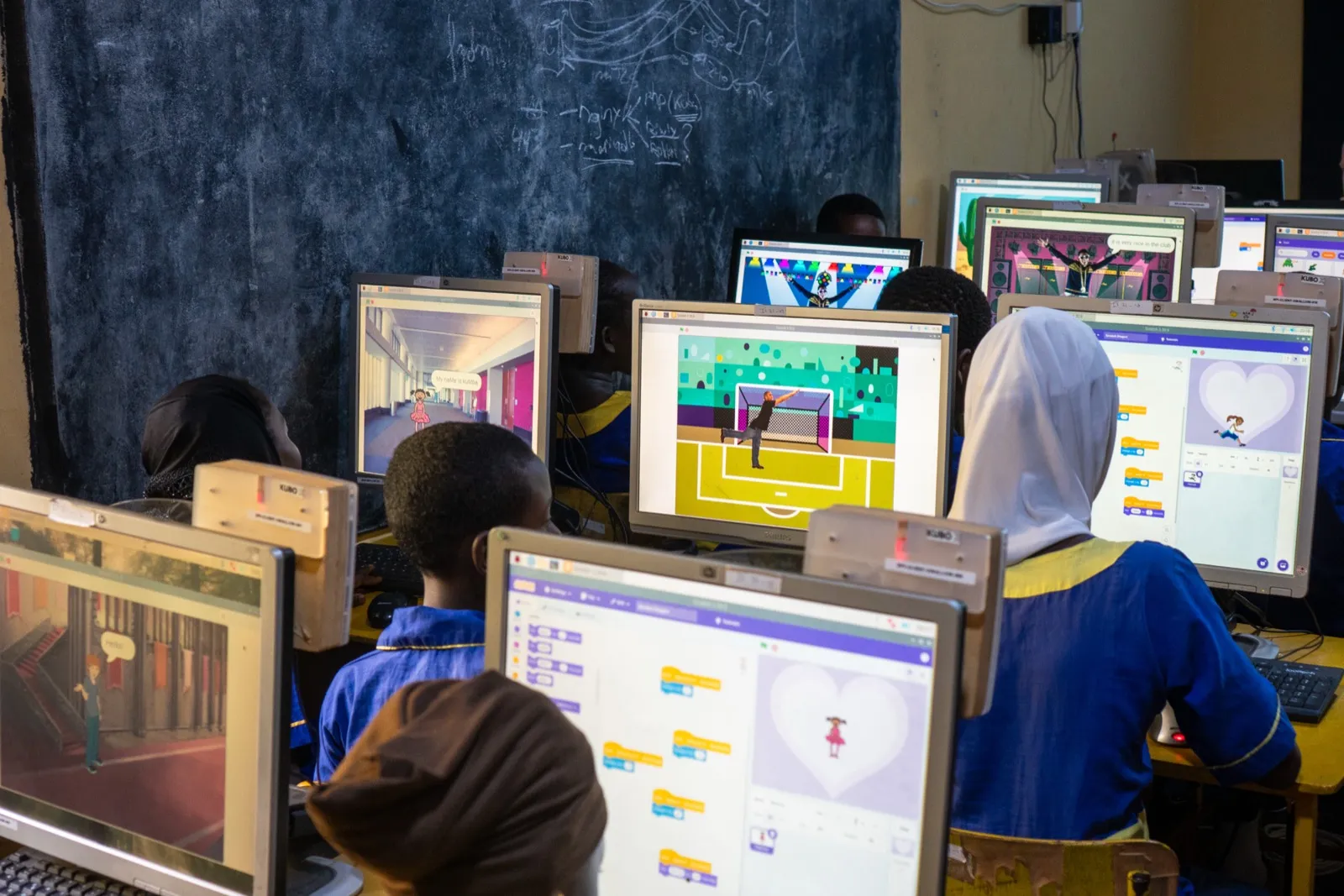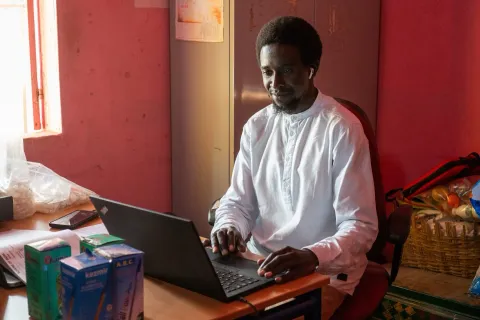
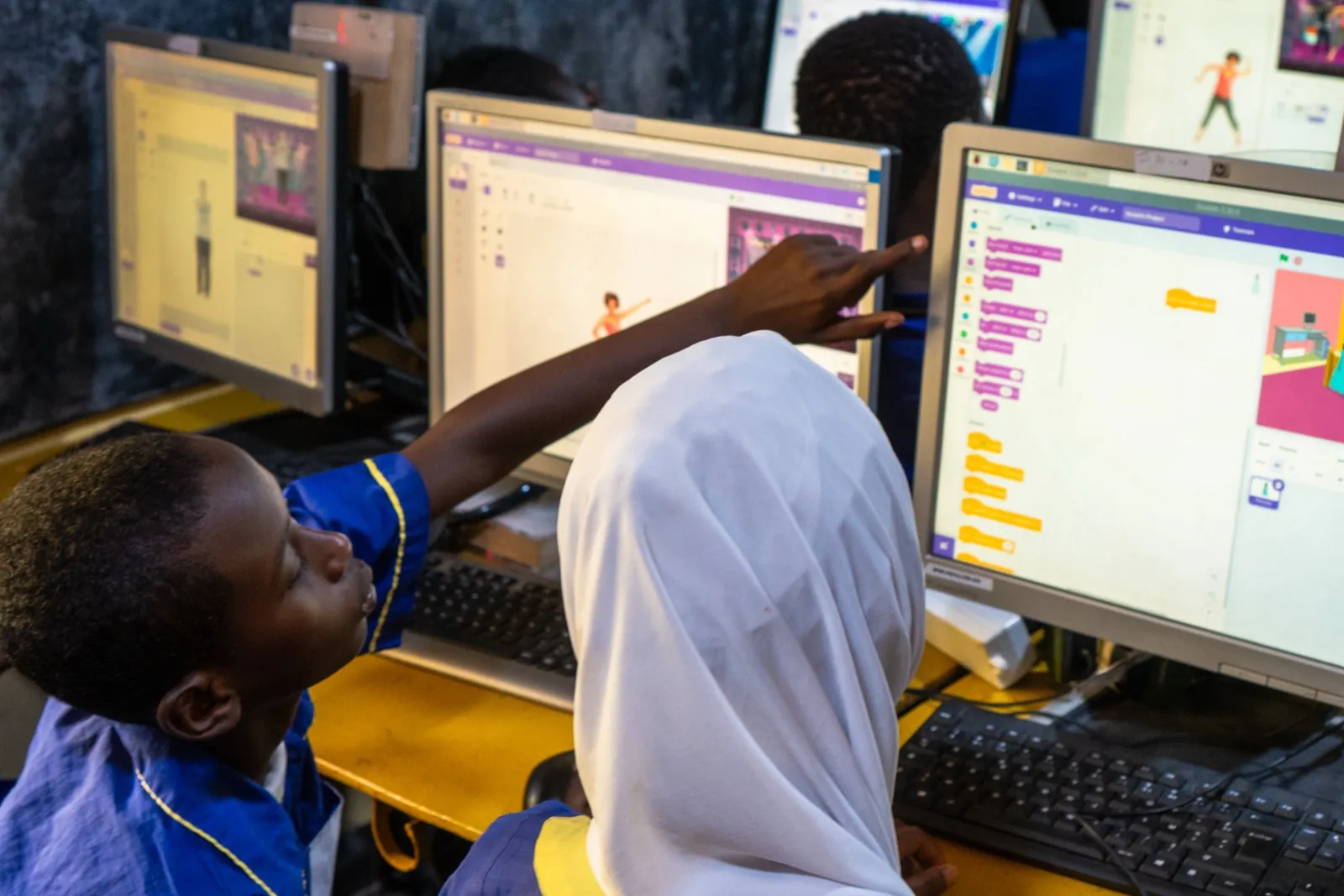
A computer at every seat where students type, code in Scratch and look the world up, built tough enough to keep doing it through dust, heat, power cuts and tight budgets.
What it costs, roughly: a complete seat from about €184 with a reused screen, the whole-school server about €319, a full 25-computer lab about €9,000. The software is free and open source. Plan it for your school →
An IT lab is more than just the computers. In the schools we work with it also means power that keeps them on, a network and content that work without internet, and upkeep with little IT support on hand, all on a tight budget and in hard conditions. The KUBO IT Lab is designed around exactly these realities, from the ground up, so every choice that follows answers one of them.
Proprietary operating systems and office suites carry per-seat licences that recur every few years.
The KUBO IT Lab runs entirely on free, open-source software, so there is nothing to pay for or renew.
Grid power is unreliable or absent in many developing countries. In the countries the UN classifies as least developed, more than half of primary schools lack electricity.
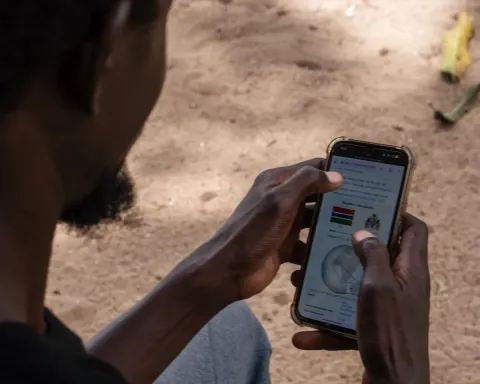
KUBO does not fix the grid, it needs far less of it. A school can start with a solar-powered server reached from smartphones, then add energy-efficient computers when the time is right, each seat drawing a measured 30 W. A full 25-seat lab uses about 810 kWh a year, roughly a third of what a conventional lab draws; your plan translates that into local energy prices.
Source: UN SDG Report, 2025
Classrooms run hot and dusty, and conventional tower PCs pull that dust through their fans and overheat.
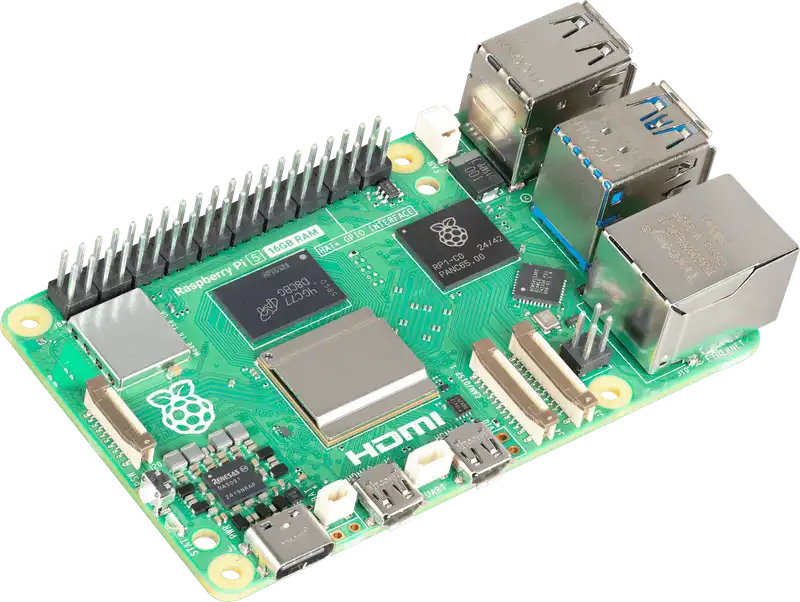
Fanless, low-heat Raspberry Pi boards, small affordable computer boards, in a case built for airflow take it in stride.
Most schools have little or no IT support on hand.
Because every machine is identical, restoring a broken one is a few-minute SD-card swap, with no specialist or vendor call-out needed.
Spare parts can be hard to source locally, and an imported component can mean weeks of downtime.
The Pi uses standard, globally available parts, and the whole system lives on a cheap SD card, so repairs stay quick and cheap. At The Swallow the first boards served nine years before a recent upgrade, and worn screens and keyboards were simply replaced with what was around or sourced locally.
Reliable internet is out of reach for many schools, and where a connection exists it is often slow and costly. In much of the world 1 GB of mobile data still costs more than the UN's affordability target of 2% of monthly income.
The KUBO IT Lab works fully offline, serving its content locally and syncing whenever even a weak connection appears. A low-bandwidth cellular connection for syncing costs around €10 a month.
Source: Alliance for Affordable Internet
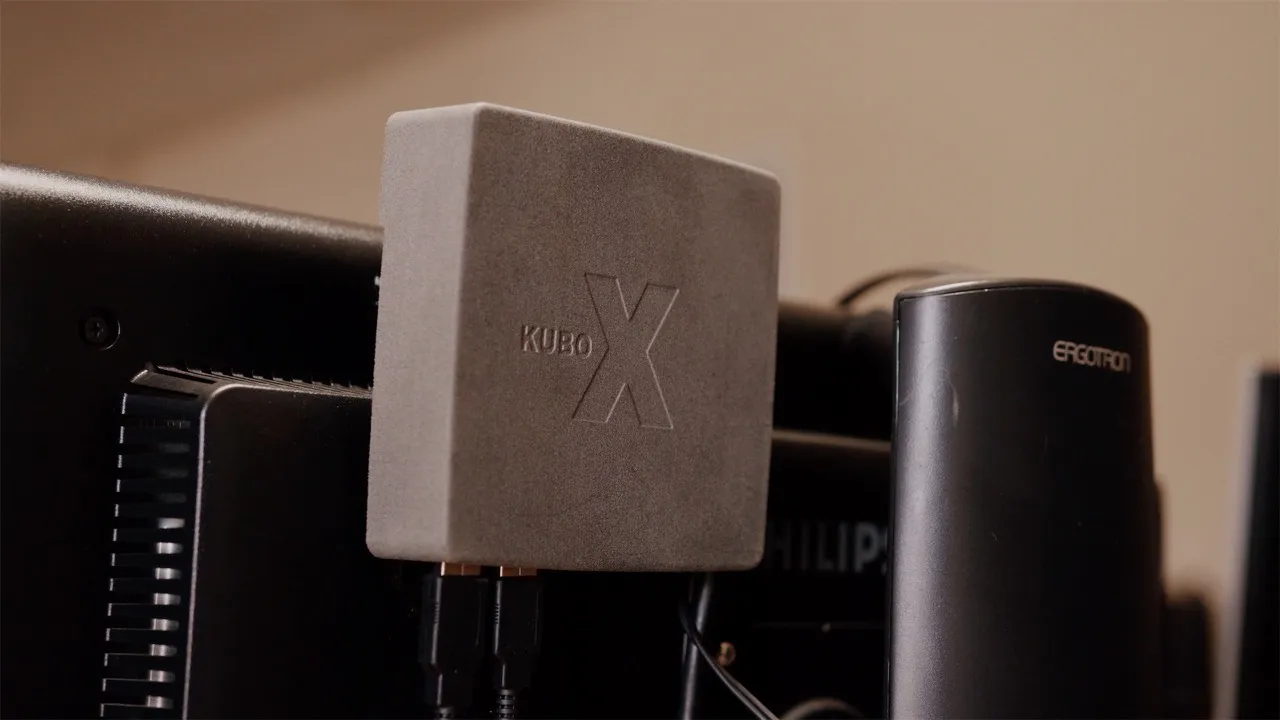
The KUBO X is the second iteration of our open enclosure, designed by our teammate Jelle Aarts around the same constraints as the lab.
Soon you can order the finished case from us, produced in series once the mold is funded. It evolved from his original V1, featured on Instructables.
We went from one school to five pilot schools across two countries. KUBO is proven, and many more schools want it.
One piece is missing. Every KUBO X, the protected workstation at each seat of a lab, still gets its case 3D-printed one at a time. The fix is a one-time investment: an injection mold, a steel form that works a bit like a waffle iron.
Donations run through Afrodidact, the nonprofit behind KUBO. Belgian donors, individuals and companies alike, receive a tax certificate for gifts of €40 or more, and companies can request an invoice when donating. If the campaign raises more than the mold needs, the surplus goes into the next production steps, starting with the packaging.
Everything a full lab involves, at a glance. During planning we go through this list together and start from what your school already has.
KUBO X computer A Raspberry Pi 4 or 5 in our sturdy case, mounted behind the screen.
Screen, keyboard & mouse Any monitor with an HDMI or DVI-D connection works, so screens the school already has can often be reused.
KUBO Offline Server The lab's heart: it brings the WiFi, the offline library and the school platform, with battery backup and an optional internet link. More on the server →
WiFi access point Optional: extends the range when one room is not enough.
Beamer & printer Optional shared extras for teaching and paperwork.
Furniture Desks and chairs, usually sourced locally.
A trained team Teachers and a caretaker who know the lab; we train them.
Wondering about the budget? See the order of magnitude on the get-started page →
No per-seat licences, ever. Each lab comes loaded with proven open tools, from the desktop to the classroom content.
And this is just the start: the lab runs Raspberry Pi OS (Trixie), so the whole Debian ecosystem of free software is one install away. Logos belong to their respective projects.
The KUBO Offline Server sits behind every seat: it serves the offline content library and runs the school platform, keeping the whole lab working even without internet. And it all works together: the Learn module serves each pupil exercises from the library at their own level, and reports mastery back to the school platform.
A Raspberry Pi is a small, affordable computer about the size of a deck of cards, yet a complete one that runs an operating system, software and the web. Millions are in use in schools and projects worldwide, and for the conditions our schools work with, we find it the perfect fit.
We don't wait for ideal conditions. Every choice starts from the hard limits schools actually work with, so the lab stays affordable, maintainable and open. Here is how it answers each one.
| The constraint | How the KUBO IT Lab answers it |
|---|---|
| Runs on almost nothing | |
| Tight budget | ✓Low-cost Pi, free open-source software |
| Power supply | ✓~30 W a seat, measured in the lab |
| Intermittent internet | ✓Works fully offline; a weak line is enough to sync |
| Survives the classroom | |
| Heat & dust | ✓Low heat output, case built for airflow |
| Theft & damage | ✓Secured custom case, tidy desks |
| Scarce spare parts | ✓Standard Pi parts & SD cards, swap in minutes |
| Stays easy to run and grow | |
| Limited IT skills on site | ✓Identical machines; restore any one in minutes |
| Growth & upgrades | ✓Add seats anytime; upgrade by swapping the Pi |
| Data safety | ✓Automated backups, cloud-recoverable |
| Future skills & freedom | ✓Transfers to Windows & Mac, open standards |
The IT Lab, Offline Server and School Platform each work on their own and are strongest together. Here are the other two parts.
The lab is one part of the KUBO setup. See the ways to get it and plan the whole thing.
An open design. The KUBO X design is shared under CC BY-NC-SA 4.0: credit Jelle Aarts, non-commercial, share-alike. Want to build on the design or adapt it to your context? and we think along.