We shape every part of KUBO around the people who use it and the conditions they work in. We work step by step, inside the schools themselves, and that keeps assumptions to a minimum. Nine years in The Gambia and Uganda shaped how we work, and the lessons we keep coming back to.
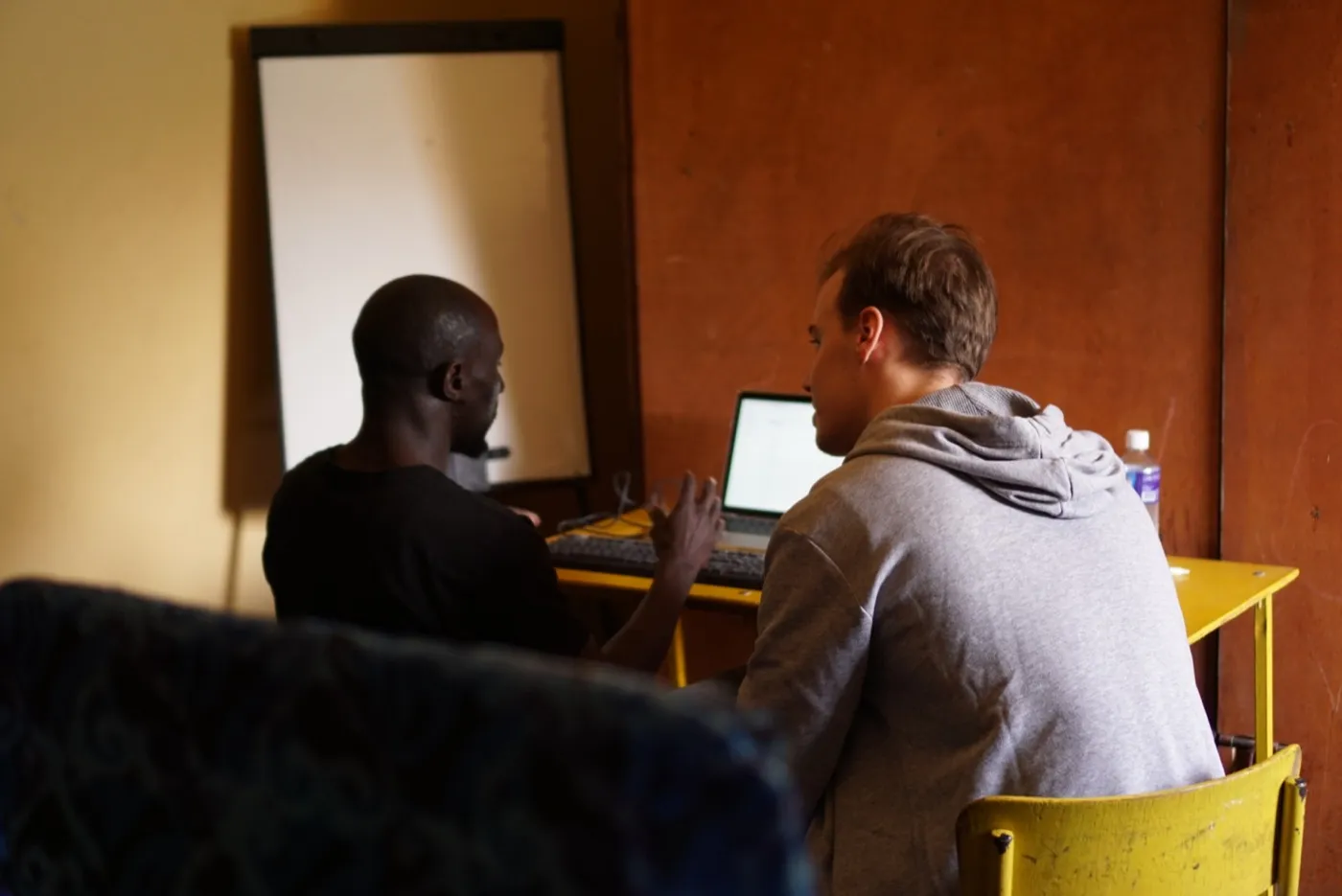
KUBO began in 2017 at The Swallow, our partner school in The Gambia. The school dreamed of computers for its students. What it had was a handful of donated laptops: slow, riddled with viruses, some broken. No ready-made solution fit its reality.
So we improvised, starting from the constraints, power that cuts out, a tight budget, weak internet, little IT support, and thinking creatively within them. A first improvised lab took shape, classes started using it, and the school felt the difference: this really solved a problem, and doing it well would take an integrated approach. So KUBO professionalised step by step: observing how the school really runs, asking where technology genuinely adds value, and building only what can run sustainably, keeping what works and dropping what doesn't.
The offline server and the school platform grew alongside the lab from the start: the server because classrooms needed content without internet, the platform because the administration was drowning in paper. We watched how the school actually ran its registers, scores and reports, and built the software around that. And we shared the journey with the wider ICT4D community along the way: an early experiment, mapping the offline library to the Gambian primary curriculum, was featured on Learning Equality's blog in 2017, and their tools still power the library today. In 2020 we joined the education track of the ICT4D virtual non-conference. Nine years later, that first classroom has grown into schools across two countries, and we want to bring KUBO to every school where it adds value, anywhere in the world. Along the way, a few lessons kept proving themselves.
Three things we hold ourselves to, in every design choice, every decision, and every way we shape our offerings.
We don't easily take no for an answer: we bring in experts, test ideas in the classroom, and keep going until it works.
No one gets left behind: a first-time computer user can take part, whether that is a pupil, a teacher or the school's caretaker, and cost and upkeep stay low enough for any school to join.
Beyond our own walls: we share what we build openly and look for partners who carry it further.
KUBO is nonprofit, and every contribution helps us keep the price of a lab lower for schools. You can support us through Afrodidact.
We learned these four over nine years in Gambian and Ugandan classrooms, often the hard way. They may well be true everywhere, but for innovation in demanding conditions they are essential, and we test every decision against them.
However well we think we know a place, we assume there's always more we don't yet understand: the country, the local way of working, the habits of each individual school. So we listen and observe first, taking in the context and what a school already has: how reliable its power is, what it can really afford. The obvious answer is almost never the right one.
Schools told us about the disappointments that came before us: clever, complicated setups that stopped working once their builders left. And fragility shows up in unexpected places, so we walk the full journey with everyone involved and check that every step is recoverable. We keep it simple: locally available parts, proven tools, and only what we truly must import, like the Raspberry Pi. Simple is what lasts.
Grand plans rarely survive reality, so we move step by step and celebrate every win along the way, however small. Each win proves an idea works in the classroom, keeps everyone motivated, and brings new partners on board. Small steps have carried us further than any master plan would have.
Changing how a school works is disruptive, and we take that responsibility seriously. So we avoid creating dependency wherever we can. Everything that can be handed over goes to the school, its teachers and technicians, and the ministry. Still, we keep offering support and services, because being able to run it yourself doesn't mean you should have to: independence is always within reach, and leaning on us stays a choice.
We are always open to new schools, partners and places.